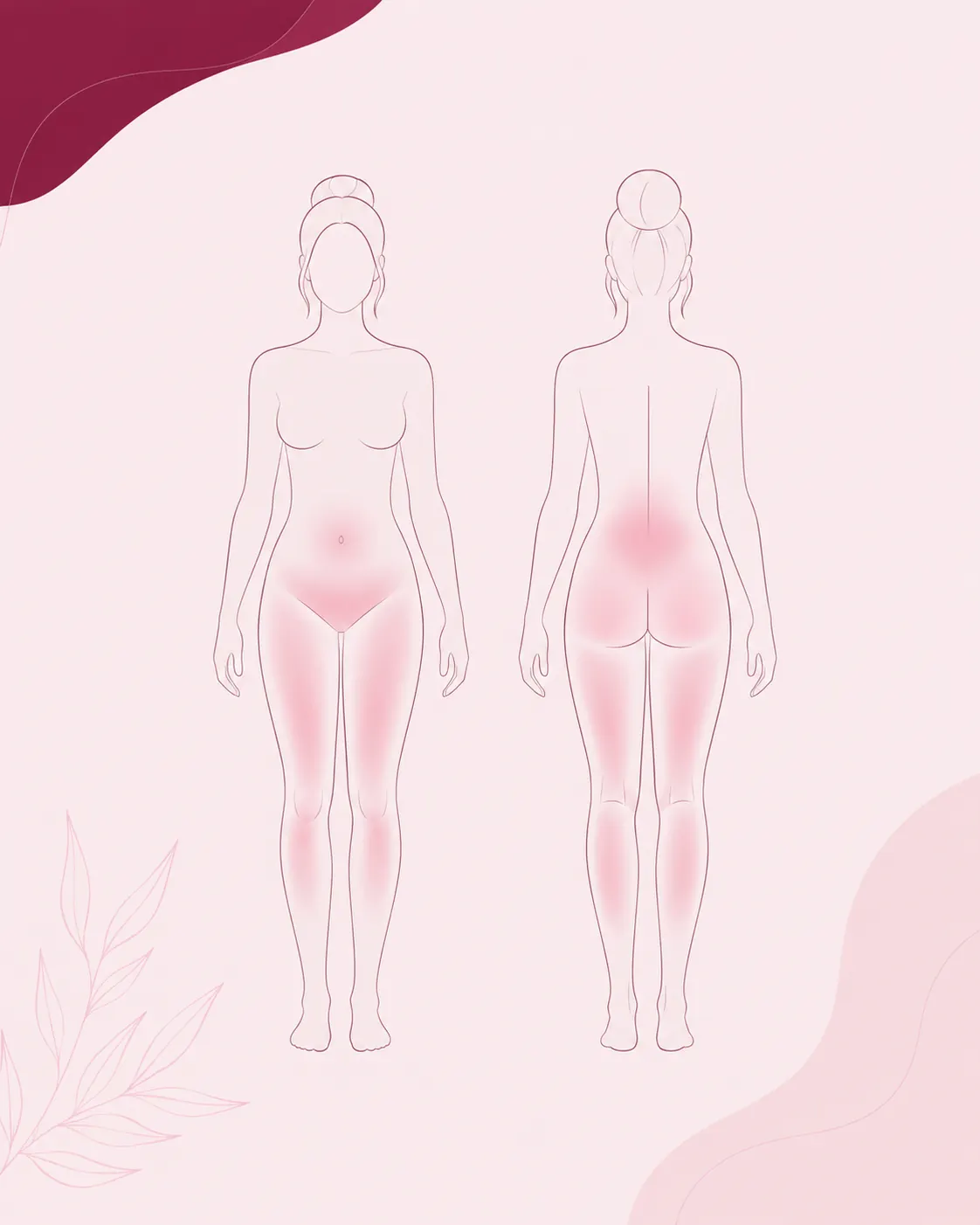
Endometriosis and polycystic ovary syndrome (PCOS) are two different conditions that are often mentioned together. They can share some symptoms, they can both affect periods and fertility, and — importantly — a person can have both at the same time. That overlap is one reason the two are sometimes confused.
What endometriosis is
Endometriosis is a condition where tissue similar to the lining of the uterus grows outside the uterus. It is strongly associated with pain — painful periods, pelvic pain, and sometimes pain with bowel movements, urination or intimacy.
What PCOS is
PCOS is a hormonal condition that commonly involves irregular or infrequent periods, signs of higher androgen levels (such as acne or excess hair growth), and changes seen on an ovarian ultrasound. Pain is not usually its defining feature.
Where they overlap — and differ
- Both can affect fertility, but through different mechanisms
- Both can disrupt periods — endometriosis often with pain, PCOS often with irregularity
- Endometriosis is characterised by pain; PCOS by hormonal and cycle changes
- The two can coexist, so having one does not rule out the other
What to ask your gynaecologist
- Could my symptoms fit endometriosis, PCOS, both, or something else?
- What would help tell them apart in my case?
- What can and cannot be seen on the test you are suggesting?
- If this test is normal, what are the next steps?